A First Cool-Weather Harvest: A Kitchen Plan for Autumn Greens
An autumn greens harvest can become dinner without guesswork: choose leaves for the dish, clean them carefully, and handle extras with safer storage habits.
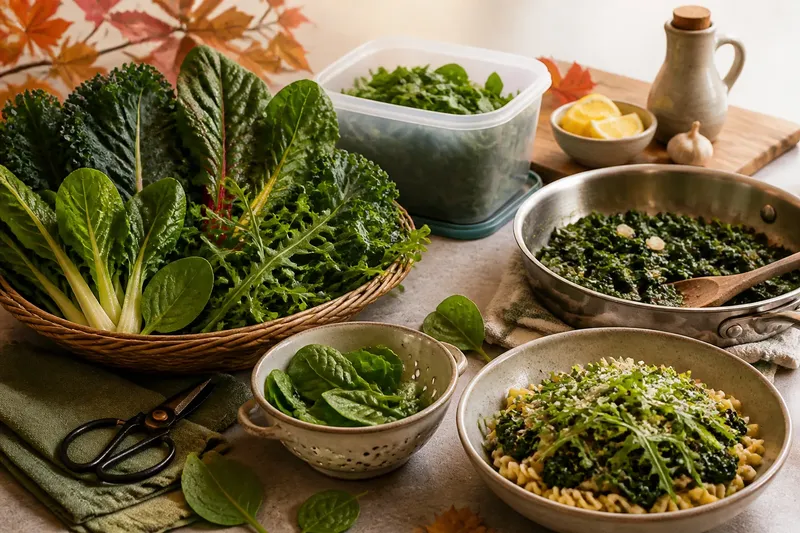
What should you do with an autumn greens harvest when you want dinner tonight and a few leaves are left over? Choose the meal first, pick only sound leaves, then clean and store them with care.
Choose the meal
Decide whether you want salad, a quick sauté, soup, or a fresh topping for eggs, beans, pasta, or toast. That choice helps you select leaves by texture and flavor.
Young spinach, arugula, and small lettuce leaves suit raw dishes. Kale, chard, mature spinach, and mustard greens are better candidates for cooking. For a milder mix, use peppery mustard or arugula sparingly.
Inspect the plants before cutting. Choose leaves that are intact and free of visible soil buildup, slime, or rot. Avoid leaves with substantial insect damage or any sign of spoilage. A small selection from several plants can be more useful than stripping one plant bare.
Pick what you need
Harvest when the leaves are dry if your schedule allows. Use clean scissors or a small harvest knife for leaves that do not detach easily with a gentle pinch. Collect them in a clean bowl or basket, and avoid crushing them under a heavy pile.
For plants that keep producing, take outer leaves and leave the growing center undisturbed. With loose-leaf lettuce, pick individual leaves if you want the plant to continue growing. If a crop is nearly finished, gather a larger portion only if you can use it promptly.
Say you have a few kale leaves, some baby spinach, and a little arugula, and you plan to make pasta. You decide to cook the kale and spinach with the pasta, then add a small handful of arugula after serving. The expected result is a warm dish with a peppery fresh finish, while the remaining plants stay available for another meal.
Clean greens safely
Sort the harvest before washing. Remove damaged leaves, tough stems, insects, and loose soil. Keep delicate leaves separate from sturdy ones if you plan to prepare them differently.
Rinse greens under cool, clean running water, rubbing or separating leaves gently to release grit. For leaves with heavy soil, place them in a clean bowl of cool water, agitate gently, lift them out, and repeat with fresh water until no grit remains. Do not pour settled grit back over the leaves. Dry them with a clean towel or salad spinner, especially if serving them raw.
Wash hands before handling the greens, and use clean utensils, bowls, and work surfaces. Keep raw greens away from raw meat, poultry, and seafood and their juices. If the greens are intended for someone at higher risk from foodborne illness, follow current advice from a qualified food-safety authority about serving raw produce.
Store extra leaves
For extra greens, remove visibly damaged leaves and chill them promptly in a clean, covered container or produce bag. Keep the refrigerator clean, and use the greens as soon as practical. Do not rely on a towel in the container to make greens safe or to extend their storage time.
There is no single storage duration that fits every leafy crop or refrigerator. Check the leaves before use; discard any that are slimy, moldy, or spoiled, and do not taste them to decide whether they are safe. If you are unsure about safe handling for a particular crop or situation, consult current guidance from a qualified food-safety authority.
It is not worth trying to salvage leaves that smell off or have turned slimy. Discard them rather than trimming around the problem.
Build a simple plate
Let greens be one part of dinner. Pair them with a filling base and simple seasoning:
- Quick sauté: Warm olive oil in a pan, add sliced garlic if you like, and cook sturdy greens until wilted and tender. Finish with lemon juice or vinegar.
- Soup: Stir chopped spinach, chard, or kale into the pot near the end of cooking, until the leaves soften.
- Grain bowl: Top cooked rice, barley, or beans with sautéed greens, a fried egg, or a spoonful of yogurt.
- Fresh finish: Add clean arugula or tender lettuce to pasta, roasted vegetables, or toast just before serving.
Taste before adding more salt, especially if the dish already includes salted cheese, broth, or olives. If the greens have a strong bite, pair them with creamy beans, potatoes, or a mild dressing.
Autumn greens questions?
Can I harvest after a cool night?
Inspect the leaves before cutting. If they are firm and undamaged, they may suit your meal; set aside leaves that are limp, torn, or visibly frost-damaged.
Can I mix different greens?
Yes. Combine tender spinach with a smaller amount of peppery arugula, or cook similarly sized pieces of kale and chard together.
How much should I pick?
Gather the amount your dish can use, then stretch it with beans, grains, eggs, soup, or another vegetable. If the plants cannot spare more leaves, make greens a topping rather than the main ingredient.
What if the leaves are gritty?
Rinse them again in a fresh bowl of cool water, then lift the leaves out without disturbing settled grit. Separate folded leaves or stems and repeat until the grit is gone; discard leaves that remain dirty or cannot be cleaned adequately.
Plan the next harvest
After dinner, note which leaves suited the dish and which plants still have sound growth. For your next autumn greens harvest, match tender leaves to raw dishes and sturdier ones to a pan or pot, then gather only what you can prepare promptly.