One Large Pot or Several Small Ones for Herbs?
Choose one large pot or separate herb pots by matching growth habits and watering needs, so each plant gets room and care that suit it.
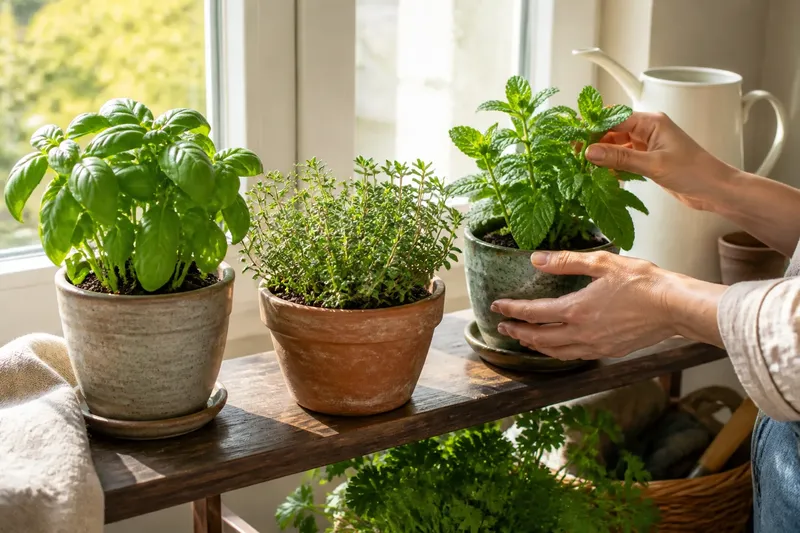
Should you plant herbs in one large pot or several small ones? Choose by comparing how much moisture and space each herb needs. A shared pot can suit basil, parsley, and cilantro, while mint and rosemary are often easier to manage in separate containers.
Sort your herbs by watering habits, growth, and light needs. Group plants that can share those conditions; use individual pots when one plant’s care would make the others harder to tend.
Watering Needs
Basil, parsley, and cilantro generally prefer evenly moist potting mix. Rosemary, thyme, and oregano are more comfortable when the mix has a chance to dry between waterings. In one pot, you have to choose conditions for the whole group, so a moisture level that suits one herb may not suit another.
Check the mix with a finger instead of following a fixed calendar. If it feels damp and cool, wait before watering. If it has dried through the upper layer and the pot feels light, check whether the plant needs water. A shared container means one watering decision for all its occupants; separate pots let you respond to each herb.
Choose several pots when your herbs have different watering preferences or one dislikes consistently moist soil. Choose a shared pot when its occupants tolerate similar moisture and you want to tend them as a group.
Growth And Space
Mint spreads by underground stems and can take over a mixed planting. Give it its own container, even if you set that pot beside a shared planter. Lemon balm can also spread freely, so a separate pot makes its growth easier to contain.
Rosemary can become woody and broad, while thyme and oregano tend to fill space near the soil surface. Fast-growing basil may shade smaller companions in a crowded pot. For a shared container, leave room for each herb to grow without shading or crowding its neighbors.
Pruning can help manage a compatible group, but it cannot fix unsuitable spacing. If you repeatedly trim one herb just to keep another visible, separate them instead of maintaining a constant contest for light and room.
Choosing A Setup
- Sunny ledge: Observe whether the ledge has room for a broad container; if it does, group a few herbs with similar watering needs, but leave space between them. If it does not, use separate pots that fit without crowding.
- Different thirst levels: Check whether the herbs dry out at different rates; if they do, use separate pots so you can water each as needed. If their moisture needs are similar, a shared pot may suit them.
- Mint or lemon balm: Check whether either spreading herb is in the group; if so, give it its own pot. If neither is present, decide based on moisture and space instead.
- Different harvest habits: Observe whether you plan to harvest one herb heavily; if so, separate pots make it easier to reach and trim that plant. If you will harvest the group similarly, a shared pot may be convenient.
- Simple care: Check whether the herbs have similar watering needs; if they do, one container can make watering straightforward. If not, use separate pots and check each one individually.
- Indoor moves: Observe whether the herbs need different positions near a bright window; if so, choose separate pots you can rearrange. If they can stay together and the planter is easy to lift, a shared pot may work.
Say you have a narrow balcony shelf, one basil plant, one thyme plant, and one mint plant. You compare their watering needs and growth habits, then place mint in its own pot because it spreads. You put basil and thyme in separate pots because they prefer different moisture conditions. The result is three containers you can check and water individually, with mint contained and each herb easy to reach for harvesting.
Container And Drainage
A large pot is useful only if it has drainage holes and enough room for the herbs’ roots and mature spread. Choose a container that lets you water without spilling over the rim. For a shared planting, account for how large each herb can grow, not just the size of its nursery plant.
Small pots are easy to position and tend individually, but their mix can dry faster. Check them more often, especially in warm, breezy weather. Use potting mix made for containers rather than dense garden soil, which can compact and complicate watering.
You can place a smaller nursery pot inside a larger planter as a removable insert. That creates a unified look while keeping roots separate; it does not make the plants share growing space. This can be useful for containing a spreading herb.
Common Herb Questions?
Can basil and rosemary share a pot?
Separate pots are usually easier because basil prefers more consistent moisture than rosemary. If you plant them together, use a freely draining container and avoid keeping the whole mix wet for basil’s sake.
Does mint need its own container?
A separate pot is the simplest way to stop mint from spreading through a mixed planting. Set it beside the other herbs if you want the containers to look like a collection.
Are small pots harder to maintain?
Small pots need more frequent checks because their mix can dry faster. In return, you can water and position each herb according to its own needs.
Can I move herbs from a shared pot later?
You can separate them if each plant has enough healthy roots to handle the move, though established roots may be tangled. If one herb is clearly crowding its neighbors, separate it before the container becomes difficult to manage.
Keep Care Manageable
Follow the herb’s label when its care directions differ from general guidance, and check that the container drains before planting. Skip gravel at the bottom as a shortcut; it does not replace drainage holes or suitable potting mix.
Forcing every herb into one decorative planter is not worth the effort if their care needs conflict. Group a few similar pots for a cohesive look without making the plants share unsuitable conditions.
The best choice between one large pot or several small ones for herbs is the arrangement you can tend without guesswork. Match watering and space needs, contain spreading herbs, and place each pot where you can check the mix and reach the leaves when you harvest.