The Neat-Row Myth: Why Vegetables Need Not Grow in Straight Lines
Vegetable garden layouts can use blocks, curves, or short rows. Match crops to your space and access needs to make planting and care easier.
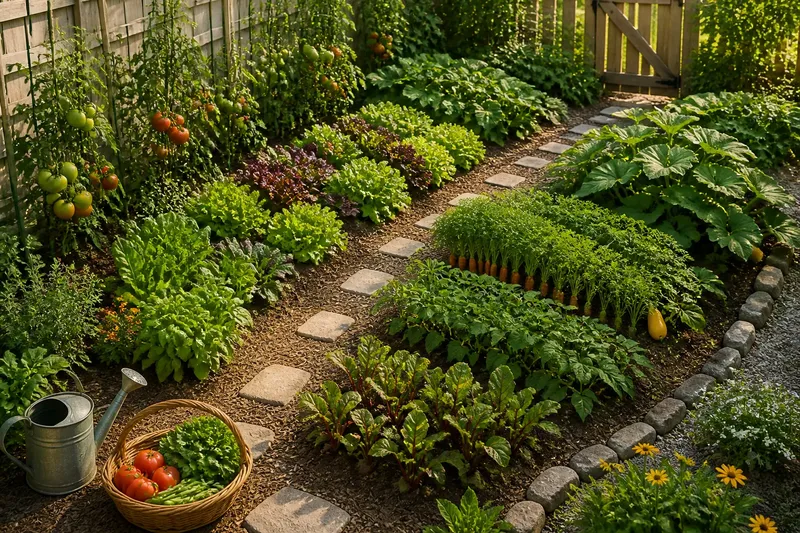
Can a vegetable garden work without straight rows? Yes. A vegetable garden layout can use short rows, blocks, curves, or separate clusters, as long as each crop has room, light, and access for care. Choose a pattern that fits the usable ground and makes routine work manageable.
Why vary the layout?
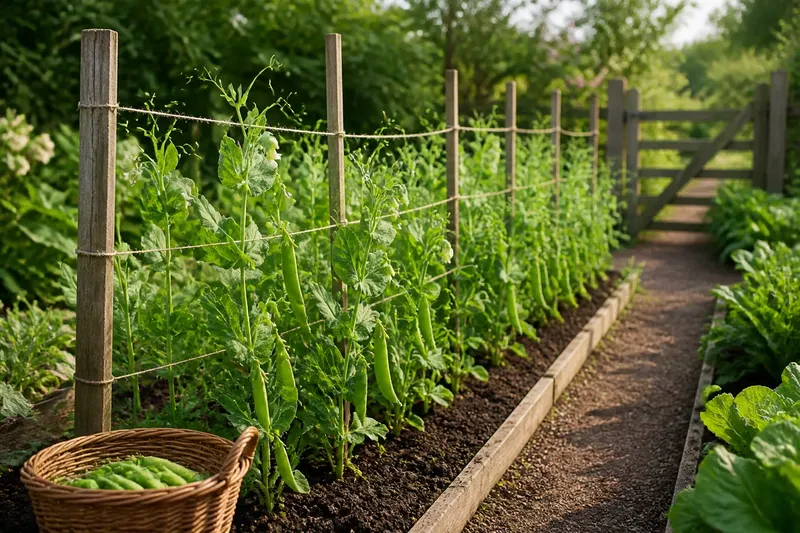
Straight rows are useful when they suit the site: they can leave clear paths and make it simple to see where crops begin. But they are not a rule. A narrow side yard, an irregular bed, or a patch interrupted by a tree may work better with a shape that follows the available space.
Start with what you need to reach. You should be able to weed, water, inspect leaves, and pick crops without stepping on growing soil or stretching across fragile plants. A bed that is easy to tend matters more than a tidy pattern viewed from the gate.
Vegetables also need different kinds of space. Compact leafy crops, bush beans, and sprawling squash do not need identical geometry. Plan for mature growth and access rather than drawing every crop as a narrow line.
Fit the bed to its site
Map the ground that is actually available before choosing a shape. Mark walls, fences, established plants, gates, paths, and places where water collects. Observe where sunlight falls during the growing season, especially if a building or tree casts a moving shadow.
For a bed reachable from both sides, keep its center within comfortable arm’s reach from the edges. If it sits against a wall or fence, make it narrow enough to tend the back without stepping into the bed. Use stepping stones or a firm path where access across a larger growing area is unavoidable.
Then divide the bed by crop needs. Put tall plants where they are less likely to shade shorter ones, and reserve accessible spots for crops that need frequent picking. Keep sprawling plants near an edge if their leaves and runners can spread without blocking a path.
Match layouts to crops
Shape each planting around how the crop grows and how you will harvest it:
- Leaf lettuce and other compact greens: Use small blocks or staggered clusters that are easy to pick from.
- Carrots and beets: Sow a short row or narrow strip so seedlings are easy to identify and thin.
- Bush beans: Give them a patch with open sides for picking instead of placing them behind taller growth.
- Tomatoes: Leave room to support, inspect, and harvest each plant. Set supports while planting to avoid disturbing roots later.
- Squash: Allow room for leaves and runners, or direct growth toward an open edge away from paths and smaller crops.
These are starting points, not fixed recipes. Seed packets and plant labels give spacing and growth guidance for particular varieties. Follow those directions, then adapt the planting shape to your bed.
Leave room for paths
Make paths suit your routine: carrying a watering can, turning with a harvest basket, or kneeling beside a bed. A path that looks generous on paper may feel cramped once plants spread. Leave room for leaves that lean over edges, especially near a gate or narrow passage.
Keep walking surfaces distinct from growing areas. Mulch, stepping stones, or a maintained grass path can mark where to walk. Avoid a path that funnels runoff into a bed or makes the far edge awkward to reach.
Not every spare patch needs a crop. A narrow access strip can prevent crushed stems and make weeding less frustrating. It is not worth squeezing in another plant if you cannot reach it without trampling something else.
Keep mixed planting manageable
Mixed planting works if you can still see and tend each crop. It can use gaps between plants with different sizes or harvest schedules, but avoid a tangle where seedlings disappear and leaves overlap before you can inspect them.
Group crops by the work they need. Put plants that need regular picking near a path, and keep seedlings that need careful watering easy to identify. Place crops with similar light and watering needs near one another so you can care for them without treating the whole bed as if every plant were the same.
Say you have a narrow bed beside a sunny fence, with a gate at one end. You mark a path along the bed, place supported tomatoes beside the fence, set a reachable strip of lettuce near the path, and put squash at the open end with its runners directed away from the gate. The expected result is clear access to pick and tend each crop, while the squash can spread without blocking the entrance.
Keep the plan readable
Use simple markers to show where each crop starts and ends. Write plant names on weather-resistant labels, or sketch the bed with its edges and paths. Keep the map practical: it should help you identify seedlings, notice empty spaces, and remember where each crop is planted.
Leave room for sowing and maintenance. A clear edge makes it easier to weed without pulling a crop by mistake. For direct sowing, mark short strips or patches before planting so seed rows do not disappear among existing seedlings.
Review the arrangement as plants grow. If leaves block a path, redirect a runner or move future sowings to a more accessible spot. If a small crop is shaded, note the problem for your next layout rather than forcing every plant to stay in its original position.
Vegetable garden layout questions?
Should I draw the bed before planting?
A quick sketch helps expose access problems before seeds go in. Mark paths, fixed obstacles, sunny areas, and the mature footprint of larger crops, then revise the sketch as conditions become clearer.
Can I plant vegetables in curves?
Yes, if the curved planting remains easy to reach and weed. Use gentle curves rather than tight turns that make it hard to identify crops or keep a clear path.
Should every crop have its own patch?
No. Compatible crops can share a bed if you leave enough space to see, water, and harvest each one. Keep plants with very different space or access needs from crowding one another.
What if part of the garden gets shade?
Check when and where the shade falls, then compare that pattern with the light guidance for each variety. Put taller plants where they are less likely to shade crops that need a sunnier spot; if the shaded area remains, reserve it for crops suited to those conditions.
When to change the plan
Adjust the layout when it repeatedly makes ordinary care awkward. A crop that spreads into a path, a bed you cannot reach across, or a cluster that hides seedlings gives you useful information for the next sowing. Change one part of the plan without redesigning the whole garden.
Vegetables need not grow in straight rows; they need a layout that gives them room and gives you access. Start with the shape of your usable ground, place crops according to their growth habits, and keep paths clear. For a vegetable garden layout that is easier to tend, choose a pattern you can maintain as the plants mature.