From Kitchen Plot to Seed Catalogue: A Brief History of the Home Vegetable Garden
Explore the history of the home vegetable garden and learn how food needs, seed choices, and household routines can shape a plot that suits your life.
What should the history of the home vegetable garden tell you about shaping a plot today? Start with the kitchen gardens that put useful crops within easy reach, then follow how seed choices and household routines influenced their design. The past offers no single template, but it does offer a practical question: what should this garden do for the people who tend it?
Household plots have taken many forms: working kitchen gardens, market-oriented growing spaces, ornamental beds, and compact patches. These forms overlapped, and their purposes varied with local food sources, available land, climate, and labor. A garden could supply meals, add particular flavors, or make an outdoor space more inviting.
Food Near Home
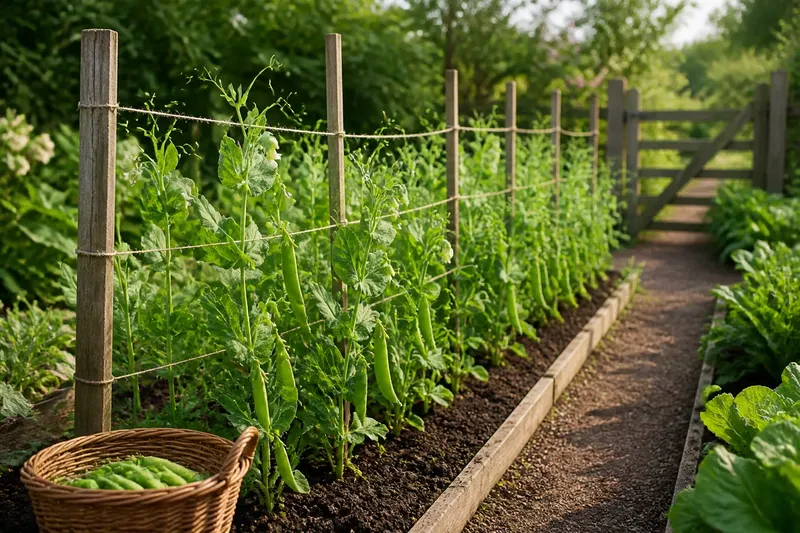
Where households depended on home-grown produce, a garden could be a working extension of the kitchen. Its crops and layout reflected what people ate, what the local season allowed, and how much land and labor were available. Herbs and vegetables picked often could be placed close to the house; crops needing more room could go elsewhere.
The term “kitchen garden” captures that connection between growing and cooking. A plot brought together land, seed, seasonal knowledge, and routine care to provide ingredients. Convenient paths and access mattered because people had to tend the plants and bring their harvest inside.
Home gardens were not the only source of food. Depending on the place and household, people might also rely on markets, neighbors, or local sellers. The garden’s role therefore varied; there was no single layout or level of self-sufficiency shared by every household.
Seed Choices Expand
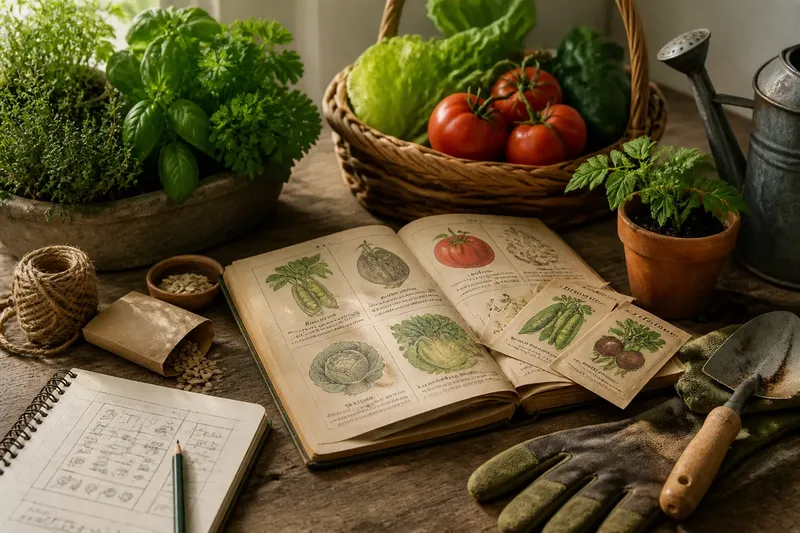
Saving seed connected one growing season to the next. Gardeners could keep seed from plants they wanted to grow again, while exchanges and purchases provided other options. Which crops appeared in a garden depended partly on the seed a household could obtain, as well as on soil, climate, and preference.
Commercial seed sellers and printed catalogues offered another route to choosing crops. They let customers compare named varieties and consider options beyond local exchanges. Catalogue illustrations and descriptions also presented plants as choices to select, alongside the practical work of producing food.
This change did not make seed saving obsolete or make every variety available to every gardener. A grower might save seed from a suitable open-pollinated crop, buy a variety for a particular quality, or use both approaches. The choice still depends on the crop, local growing conditions, and what the household wants to eat.
Domestic Space Changes
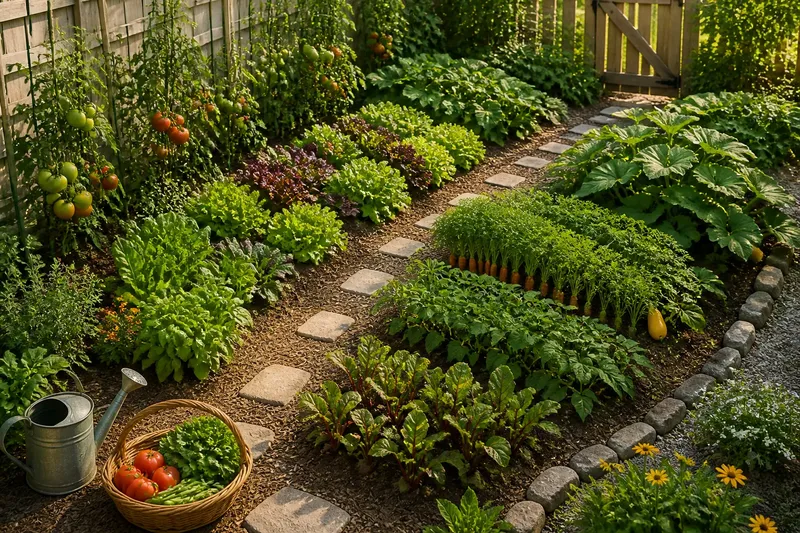
A garden can serve several purposes at once. It may supplement bought food, provide a flavor someone especially likes, or give a household a reason to spend time outdoors. Some layouts keep crops close to the kitchen; others incorporate vegetables into a yard with flowers, fruit, paths, or seating.
That mix makes appearance and use part of the same design. A neat view from a window may matter to one household, while easy picking or room to sit matters more to another. Vegetables can share space with ornamental plants without losing their role as food crops.
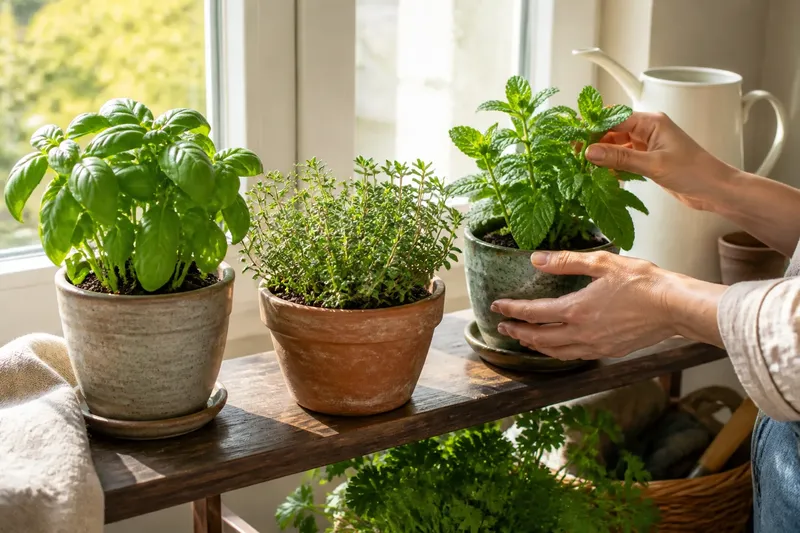
Land, time, and access still shape what is practical. Containers, shared gardens, and compact beds offer alternatives where a large plot is not suitable, but each calls for decisions about sunlight, watering, reach, and crop choice. Rather than copy an older garden’s size or shape, adapt its useful idea: arrange the space around the people who will use it.
Why Did Gardens Change?
Why were kitchen gardens near the house?
Nearby crops were easier to pick for meals and to tend as part of household routines. Frequent access could matter more than a formal layout.
Did seed catalogues replace saved seed?
No. Catalogues gave gardeners another way to find and compare varieties, while saving seed remained an option for suitable crops. A household could use both sources.
Why did vegetables share space with flowers?
Some gardens were expected to provide food as well as visual interest or a place to relax. Mixing vegetables with flowers, fruit, and paths addressed those purposes in one yard.
What can this history offer a small garden?
It encourages you to fit the plot to your household rather than reproduce a large traditional garden. Choose crops and placement based on available space, time, and intended use.
Fit the Plot to Routines
Before changing a garden, observe how you use the yard. Note where you enter, where you can reach water, which crops you pick often, and where light falls during the day. These observations help you decide whether a crop belongs near the door, in a container, or somewhere else.
Use this decision list:
- Frequent picking: If you use a crop often, place it near a regular path or the kitchen door; if access is awkward, move it closer or choose a less frequently harvested crop for that spot.
- Meal fit: If a crop suits dishes you make, keep it on the planting list; if nobody wants to eat it, replace it with a crop that fits a familiar meal.
- Seed choice: If a variety has a quality you value and suits local conditions, consider buying it; if you want to maintain a suitable open-pollinated crop, consider saving its seed instead.
- Time for care: If the layout is easy to water and tend during your normal routine, keep it; if it requires a special trip you often miss, reduce the area or relocate the crops.
- Available space: If a bed leaves room for paths and access, use it; if it crowds the yard, shift some crops to containers or a shared garden.
- Garden purpose: If you want both produce and a place to sit, reserve space for each; if food production is the priority, keep the sitting area modest rather than filling every usable patch with crops.
Say a household has a narrow sunny strip beside the back door, enjoys fresh herbs and tomatoes, and rarely visits a distant bed. Its starting choices are the available strip, those two preferred foods, and limited time for tending. The household can check that the strip gets suitable light, place containers where they do not block the doorway, and choose crops and varieties suited to the space. It can then keep the distant bed for another purpose. The expected observable result is that herbs and tomatoes are easier to reach during meal preparation, while the household avoids maintaining a plot it seldom visits.
Let Go of Old Rules
Not every historical arrangement is useful now. Separating “useful” plants from “beautiful” ones, maintaining a large plot for its own sake, or growing crops for a different household can add work without improving the harvest. Keep what solves a present problem—convenient access, familiar food, or a seed-saving practice—and leave the rest behind.
It is also not worth treating a seed catalogue as a complete garden plan. A catalogue can help you compare varieties, but it cannot choose your meals, assess your available time, or determine how you use the yard. Decide those things first, then browse for options that fit.
Use the Inheritance
The history of the home vegetable garden reflects changing relationships among food, seed access, and domestic space. Its many forms arose from different needs and resources, not from one ideal layout that works for every household.
Use that history to make choices that fit your routines. Decide which foods you want nearby, which seed sources suit your plans, and how much space you want to tend. The history of the home vegetable garden is most useful as a reminder to shape the plot around the household, not the other way around.